Can a blocked vent stack cause slow drains even when there is no clog?
Yes. If a sink gurgles, a toilet burbles when another fixture drains, or water moves slowly with no clog anywhere, a blocked vent stack is a likely cause. The vent is the pipe that runs up through the roof. It lets air in behind the water so drains flow freely. When it is blocked, the drain pulls against a vacuum, and the water crawls out of the fixture.
Common causes are leaves, a nest or debris at the roof opening. Inside the wall, a vent can also collapse or fill with scale.
A vent problem often shows up on several fixtures at once. They drain, just slowly, and they gurgle. A clog usually stops one fixture. If every drain in the house is backing up, that is a main line job, not a vent.
Safe homeowner check: listen for gurgling, look at the roof opening from the ground, and run each fixture one at a time to see which ones act up. Do not climb onto the roof yourself.
Stop running water and call now if sewer odor is strong indoors, or a toilet or floor drain is bubbling up.
A cable machine run down from the roof opening clears most vent blockages. If it keeps coming back, a camera inspection shows whether the pipe is damaged. Cost depends on roof access and how far the blockage sits.
Expert Plumbers Co is a referral service. Call (380) 262-9173 and we will connect you with a plumber serving Follett, TX for Drain Cleaning.
Several things can make a vent problem worse or confuse the diagnosis. In cold climates, frost can close the roof opening as moisture freezes around the rim, so symptoms appear in winter and ease in spring. A common mistake is treating the gurgle with repeated plunging or drain chemicals, which does not touch the real cause and can leave caustic liquid in the trap. Another sign it is getting worse is a toilet that fills slowly after flushing or a trap that loses its water seal, because that lets sewer gas into the room. Older homes often have vents routed through cramped walls with long horizontal runs where debris collects, while newer homes may use air admittance valves under sinks that can wear out and stick. When you call, mention which fixtures gurgle and in what order, since that tells the plumber which branch to follow first.
Can a drain under a concrete slab be cleared without breaking the floor?
Usually, yes. Clearing a blockage and repairing a broken pipe are two different jobs, and only the second one needs the floor opened.
In a slab-on-grade house the drain lines run inside or beneath the concrete. There is no crawlspace to inspect, so symptoms are the only evidence you have. A cable or a hydro jetter still reaches the line through a cleanout or through a pulled toilet. Grease build-up on the pipe wall, roots in a joint and scale in cast iron can all be cleared that way.
What does need the floor opened is a cracked, collapsed or bellied section under the slab. A bellied line holds water and collects waste however often it is cleared. In older housing stock where clay or cast iron was the standard, failed sections are more likely.
A camera inspection with a locator pinpoints the fault. The plumber finds the exact spot and marks it on the floor before anything is cut, which keeps the opening small. What the job involves is driven by access, the materials, how much concrete must be opened and removed, and any permit or code requirement. Opening a slab often brings one in.
Safe homeowner check: note whether one fixture is slow or every drain is affected. A single slow fixture is usually a cable job on a branch line. Every drain backing up points to the main line or the sewer lateral.
Stop running water and call now if the whole house is backing up. Report water staining or a warm, damp patch on the floor, because it can mean a leak under the slab.
Expert Plumbers Co is a referral service. We refer homeowners in Follett, TX to an independent local plumber. Call (380) 262-9173.
A spot repair under a slab is more disruption than most people picture. The plumber breaks out a section of concrete, digs down to the pipe, replaces the damaged length, and the floor is patched. Dust, noise and a few days without some fixtures are normal. Furniture and flooring over the area must be moved first, and tile or a finished floor may not match after patching.
For longer runs of damage, some plumbers can line the pipe from inside, or route a new line overhead or outside the house, which avoids cutting the slab. Whether either suits your pipe depends on its condition and on local code.
Ask to see the camera footage and the locator mark on the floor before any cutting begins. Mention in-floor heating, radiant tubing or a post-tension slab if you have one. Cutting into those without knowing is dangerous, so the plumber needs to hear about them before a saw comes out.
Water or sewage is seeping out around the cleanout cap in my yard. What does that mean?
If liquid is seeping up around the cleanout cap, the sewer line is full to ground level at that point. The cleanout is a capped pipe that gives a plumber direct access to the main line, and it is often the lowest open point on the system. When a blockage sits downstream, waste water rises until it finds the weakest spot, and that is frequently the cap.
Less often the cap itself is the problem: a cracked cap or worn threads can weep a little after heavy use. The difference is the smell and the timing. A damp ring with no odor that dries out is one thing. Grey or dark water with a sewage smell that returns every time the house uses water points to a blocked or partly collapsed line.
Look at the rest of the house. If one fixture is slow, the trouble may be local. If several drains are slow, toilets gurgle, or a floor drain or shower fills when the washer runs, the main line is the likely culprit.
Safe checks you can do:
Keep children and pets away from the wet area. Hold off on laundry, dishwasher cycles and long showers. Do not unscrew the cap. A line under pressure can spray sewage when the cap comes off, and that is a health risk.
Stop running water and call now if sewage is reaching the yard in a steady flow, if it is entering the house, or if the seep keeps growing while you are using as little water as possible.
On the repair side, a cable machine is often enough for a soft blockage such as paper or grease. Roots, heavy grease build-up or scale usually call for hydro jetting or a cutting head. A camera inspection afterwards shows whether the pipe is cracked, bellied or offset at a joint, which decides whether cleaning will hold or whether a repair is needed. Cost depends on how easy the cleanout is to reach, how far the blockage sits from it, how much needs to be dug or removed if a repair follows, and permit requirements under local code.
If the line has to be opened for repair, the local building department may need to be involved. To be connected with an independent local plumber in Follett, TX, call Expert Plumbers Co on (380) 262-9173.
The house has old galvanized steel drain lines. Why do they keep clogging, and what can cleaning fix?
Galvanized steel was used for drains in older houses, and it ages badly. The zinc coating wears off, the steel underneath rusts, and the inside wall turns rough and flaky. Rust scale builds up in layers, so the pipe gets narrower every year. Hair, soap and grease catch on that rough surface much more easily than on smooth plastic.
That is why you may see slow drains that clear for a few weeks and then slow down again. Threaded joints and fittings also form ledges where debris collects, and horizontal runs with little fall hold water and silt.
What cleaning can do: a cable machine can open a clog and scrape some loose scale off the wall. Hydro jetting can strip more of the buildup and restore much of the bore, as long as the pipe is still sound. A camera look first shows how thick the scale is and whether the steel is thinning.
What cleaning cannot do: it cannot make a worn pipe new. Rust scale can be holding a weak spot together, and aggressive cleaning of a pipe that is corroded through can open a leak or let a section collapse. A pipe that has pinholes, rusted fittings or wet stains at the joints is near the end of its life, and clearing it again and again is a short-term answer.
Do not use chemical drain cleaners on old steel. They sit in low spots and speed up the damage, and they are a hazard for whoever opens the line afterward.
A safe check: look in the basement or crawlspace for rust streaks, flaking, drips or damp spots on the drain pipes. If you see them, or if every fixture on the same stack runs slowly, tell the plumber what you found.
If a section is too far gone, the usual choices are to replace the worn runs with modern pipe or, for some lines, to line them. Cost depends on how much pipe is involved, how easy it is to reach, whether walls or floors must be opened, the materials, and local permit rules.
Expert Plumbers Co can connect you with an independent plumber in Follett, TX for this: call (380) 262-9173.
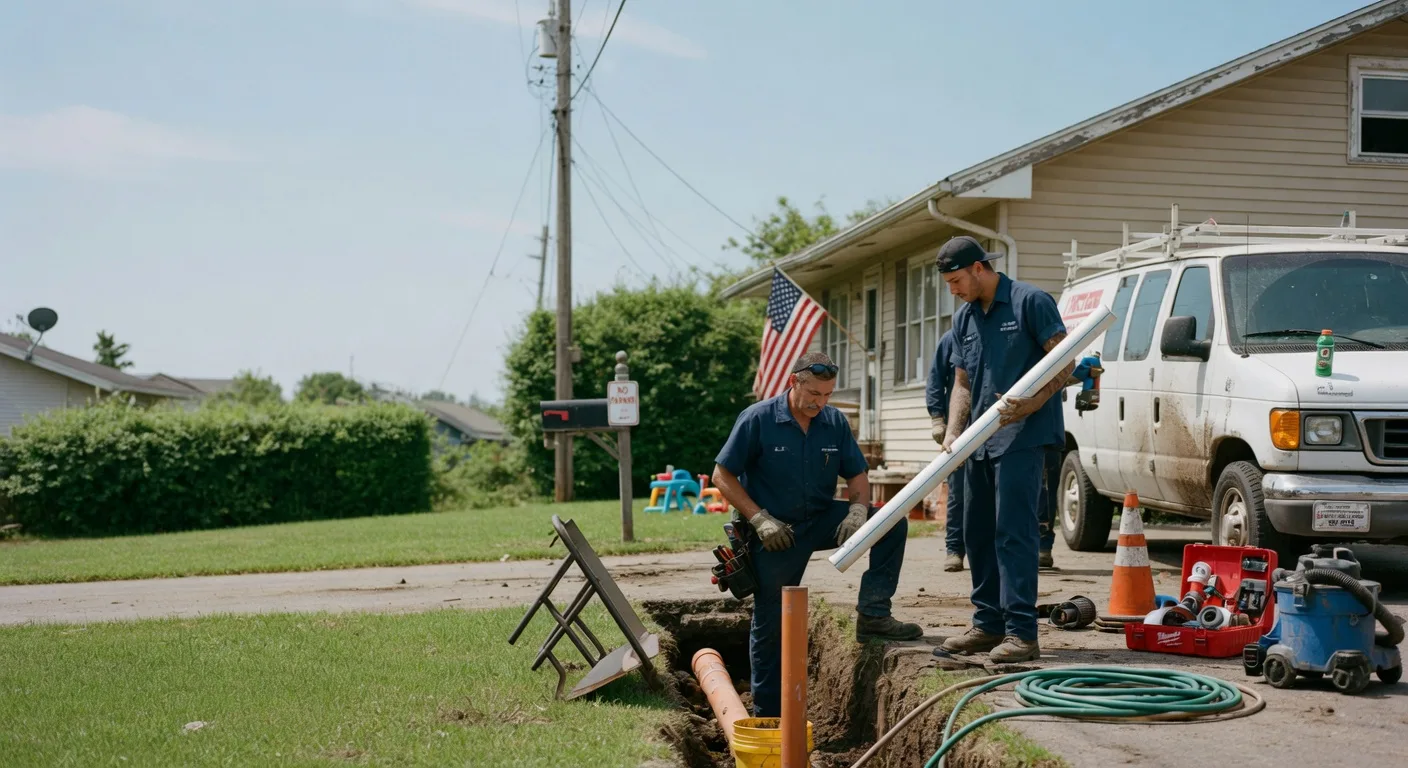
The city is replacing the street main outside our house. Why are our drains acting up now?
The crew has been digging up the street for a week, and now your toilets gurgle, the tub drains slowly, or you saw muddy water in a floor drain. It is natural to suspect the work outside. There are a few real reasons why it can be connected.
Your house drain, called the lateral, runs from your foundation to a connection on the city main. When the main is dug up and replaced, that connection is cut and reattached. Vibration, trench work and heavy equipment can crack an older clay or cast iron lateral, push a joint out of line, or shift the pipe so water now pools in a low spot. Dirt, gravel and construction debris can also wash into the line while connections are open. The work can also cause temporary backups while flow is being rerouted or the new pipe is flushed.
The key question is whether it is one fixture or the whole house. A single slow sink is probably the fixture. If every drain is sluggish, gurgling or backing up at once, particularly the lowest ones, the trouble is in the lateral or the main, and the street work is a likely suspect.
Safe homeowner check: write down when the symptoms began and compare that to when work started near your address. Take photos of any muddy water, debris or wet floor. Check whether neighbors have the same trouble. Run one tap for a minute and see if the lowest drain in the house reacts.
Stop running water and call now if sewage is coming up in a tub or floor drain, if there is standing water in the basement, or if you smell sewage inside the house. Do not keep using the washer or dishwasher.
Tell the utility or the contractor promptly. They may have a claims process, and a delay can make it harder to show when the damage started. A cable machine may be enough if loose debris is the problem. If the lateral is cracked, offset or holding water, the plumber will need a camera inspection to see the damage, and hydro jetting can flush out silt and gravel.
Expert Plumbers Co is a referral service. We connect you with an independent local plumber in Follett, TX. Call (380) 262-9173.
Ask the plumber to record the camera inspection and write down the footage location of any damage, so you can give it to the city or contractor. Scope depends on how deep the pipe is, how much has to be dug up or opened, parts and materials, and any permit or code requirement. Responsibility for the repair varies by area, so confirm who owns which section of the line.